The Better Business Brief — Issue 3
Kindness Is a Business Advantage
I’ve been thinking a lot about kindness lately.
Not the superficial version. Not being endlessly agreeable or avoiding difficult conversations.
I mean the kind of kindness that shows up in how we lead, make decisions and deal with people when things are difficult.
And I think we underestimate its commercial value.
In business, we tend to celebrate confidence, resilience, ambition, decisiveness and results.
All important.
But some of the best leaders I’ve worked with have something else in common.
They are kind
They listen properly.
They notice when someone is struggling.
They give people the benefit of the doubt before assuming the worst.
They have difficult conversations without making the other person feel small.
And they can hold someone accountable without losing respect for the person in front of them.
That matters.
Kindness isn’t the same as being nice
I think this distinction is important.
Being nice can mean avoiding discomfort.
Kindness sometimes requires the opposite.
It can mean saying:
This isn’t good enough.
I disagree.
We need to make a change.
Your behaviour is affecting the team.
This role isn’t working anymore.
Those conversations aren’t unkind.
Handled well, they can be some of the kindest conversations we have.
Leaving someone without feedback, allowing poor behaviour to continue or letting resentment build because we’re avoiding an uncomfortable discussion isn’t kindness.
It’s avoidance.

It also affects performance
The commercial case for kindness is fairly straightforward.
People are more likely to speak up when they feel respected.
They are more willing to admit mistakes.
They share ideas earlier.
They ask for help before a small issue becomes a large one.
And when people aren’t spending energy protecting themselves politically, they have more energy available to actually do their jobs.
That’s not fluffy.
That’s performance.
The standard doesn’t have to drop
This is probably the part I feel most strongly about.
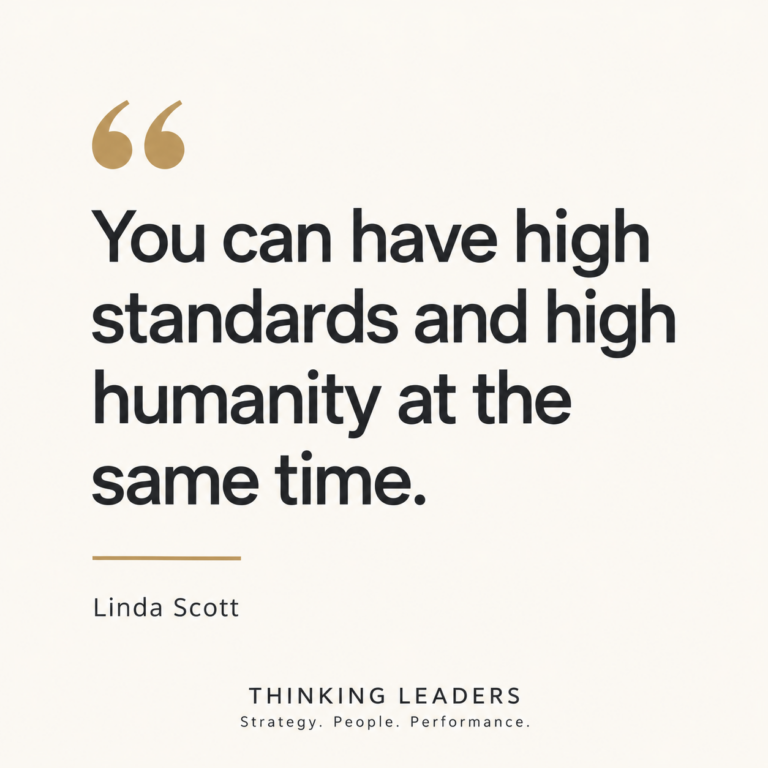
You can have high standards and high humanity at the same time.
In fact, I think the best businesses do.
You can expect results.
You can challenge thinking.
You can make hard commercial decisions.
You can hold people accountable.
And you can still treat people well while you’re doing it.
The two aren’t mutually exclusive.
A question worth asking
As leaders, we spend a lot of time asking:
How can we improve performance?
Maybe we should occasionally ask another question:
What is it like to be on the receiving end of my leadership?
Because strategy matters.
Numbers matter.
Accountability matters.
But businesses are ultimately built by people.
And sometimes a little more kindness makes all of those things work better.
The Better Business Brief
Practical thinking for founders, CEOs and business leaders at the intersection of strategy, people and performance.
One question for you:
Do you think kindness is undervalued in business?